MODULE 11 ·
PORTFOLIO RISK

Advanced Risk
& Exposure Control

This module upgrades risk from “per trade” to “portfolio level”. Crypto positions often move together, which means you can look diversified while actually taking one big correlated bet. Here you’ll learn how to measure real exposure, control correlation risk, and cap total downside when multiple trades are open at once.

Lesson 11.1

The Hidden Danger of “Multiple Good Trades”

Opening several trades can feel safer because risk is split across different coins. In crypto, that’s often an illusion. Many coins are strongly correlated to BTC and ETH, meaning a single market move can hit all positions at the same time.

Portfolio risk is the sum of your exposures—not the number of separate trades you’ve placed.
Lesson 11.2

Correlation: When “Diversification” Isn’t Real

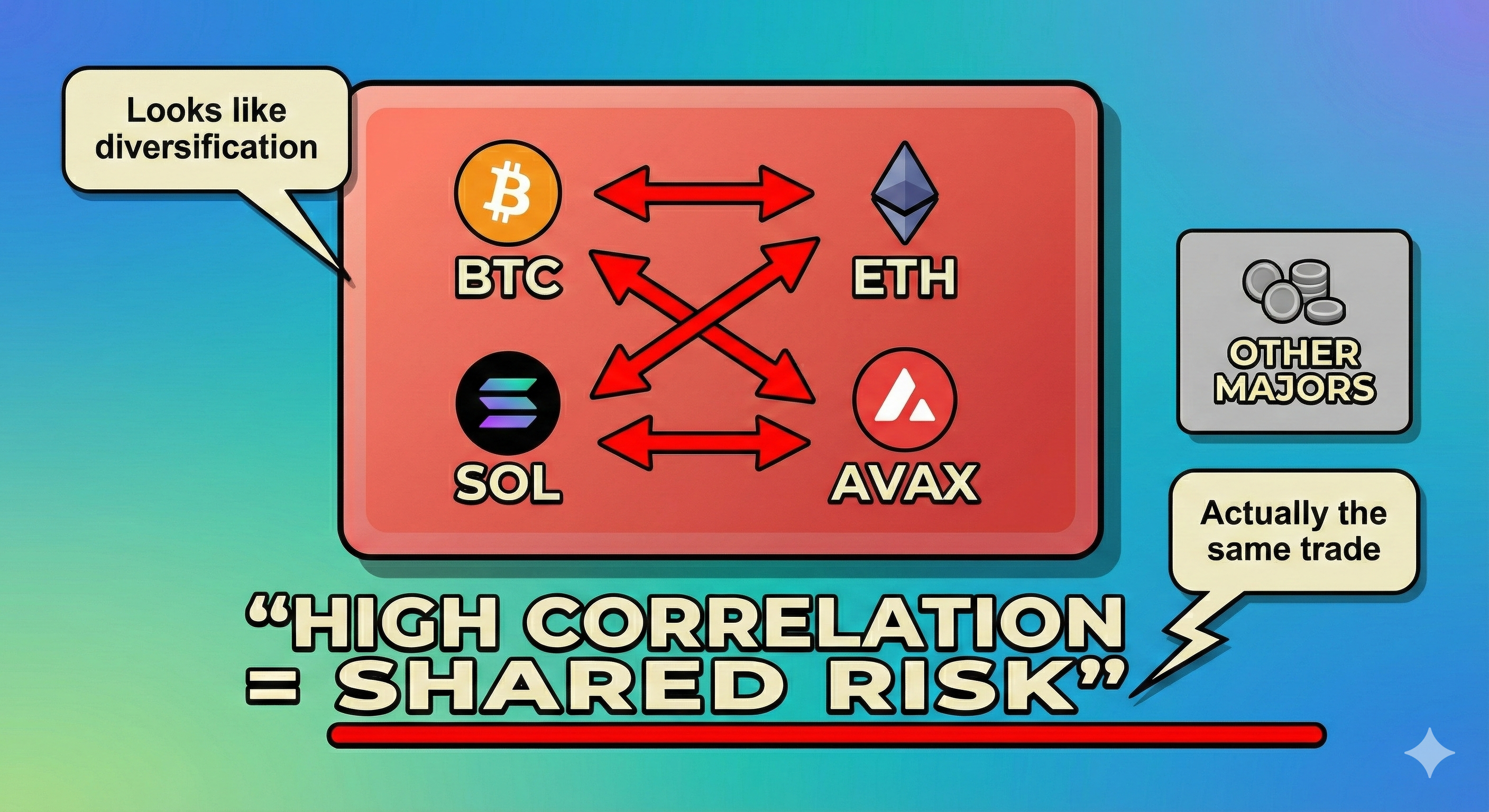
Correlation means assets move together. If BTC dumps and your alt positions dump with it, your portfolio is effectively one trade. This is why traders get surprised by large drawdowns even when every single trade “only risked 1%”.

Recognising correlation clusters helps you avoid stacking the same risk across multiple coins.

Correlation matrix showing clusters of highly correlated crypto assets and shared risk
Correlation clusters: positions that move together carry shared risk. Several trades can behave like one large leveraged bet if they’re highly correlated.
Lesson 11.3

Total Exposure vs Risk Per Trade

Risk per trade is only part of the picture. Total exposure asks: how much of your account is currently sensitive to the same market move. Two 1% risk trades that are correlated can behave like a single 2% event.

The goal is to cap total downside across all open positions so a single market shift can’t wipe out a week of progress.

Lesson 11.4

Portfolio Exposure Mapping

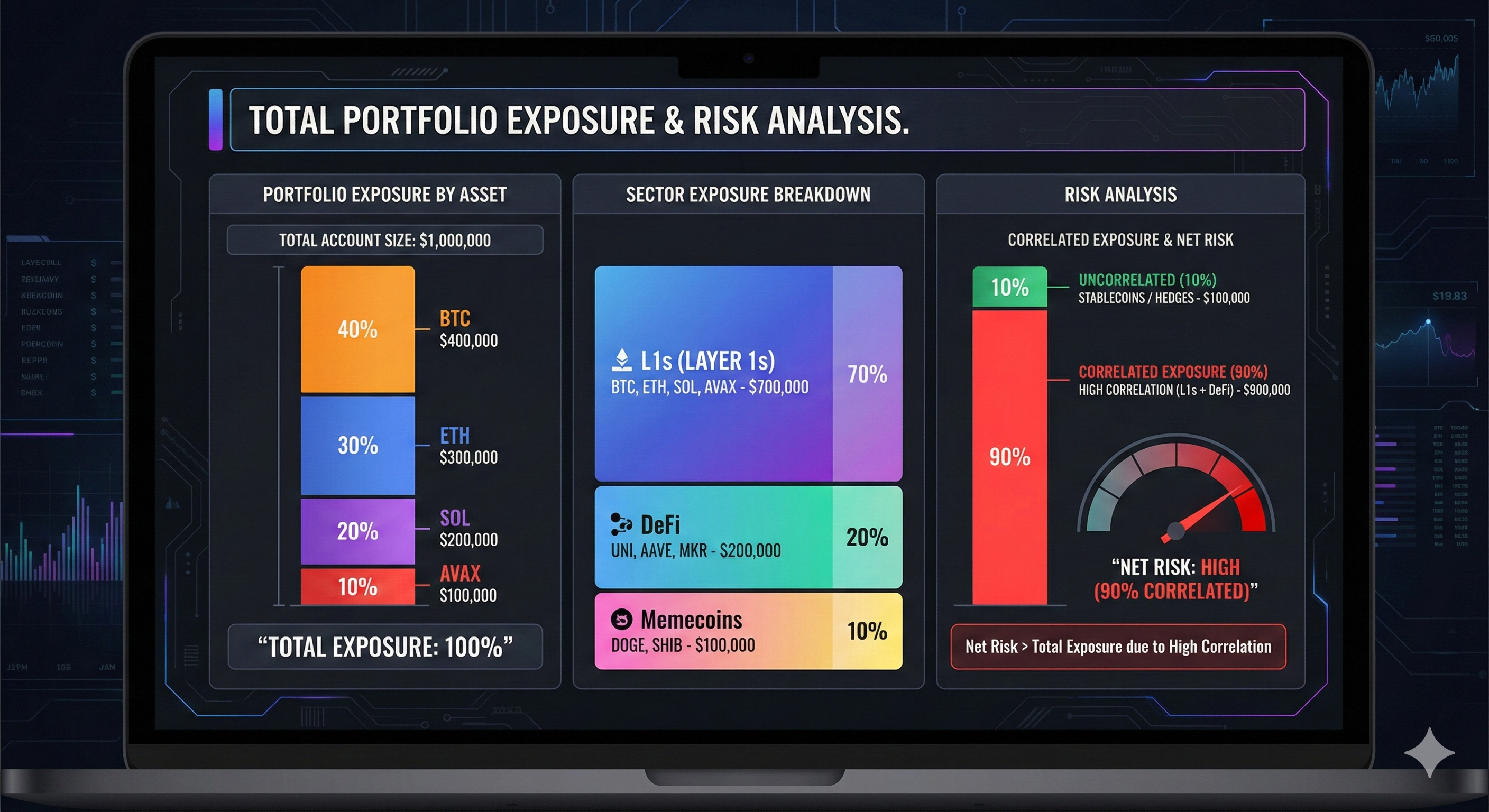
Exposure mapping turns your open positions into a clear picture: what’s allocated, what’s correlated, and what the worst-case scenario looks like if the market moves against you. This includes coin exposure, sector exposure, and whether positions are effectively the same theme.

Once exposure is visible, controlling it becomes simple and mechanical.

Portfolio exposure breakdown showing allocations by coin or sector and correlated exposure
Portfolio exposure breakdown: allocations by coin/sector plus the total correlated exposure. This reveals your true risk beyond single-trade sizing.
Lesson 11.5

Rules for Controlling Portfolio Risk

Portfolio risk control is just a few simple rules:

  • Cap maximum total risk across all open trades (example: 3–5% total).
  • Limit the number of trades inside the same correlation cluster.
  • Reduce size when volatility spikes or conditions turn risk-off.
  • Avoid doubling exposure into the same narrative/theme.

These rules stop “death by a thousand cuts” when the market shifts sharply.

Lesson 11.6

Putting It Together: A Portfolio Risk Playbook

A portfolio risk playbook defines what you allow at once: maximum open risk, correlation limits, exposure caps by sector, and when you go defensive. The purpose is consistency. When risk is stable, performance becomes easier to measure and improve.

From here, trading becomes less about emotion and more about controlled execution within clear boundaries.