MODULE 12 ·
SYSTEM MASTERY

System Review &
Long-Term Edge

Long-term profitability comes from maintenance, not hype. This module sets a clear review rhythm, the metrics that actually matter, and a controlled way to evolve your rules without breaking what works.

Lesson 12.1

Why Systems Decay Over Time

No trading system stays perfect forever. Volatility regimes shift, market participation changes, and edge can compress.

The goal is to identify whether a losing period is normal variance (expected drawdown) or real degradation (structure has changed). That prevents panic changes during a standard rough patch.
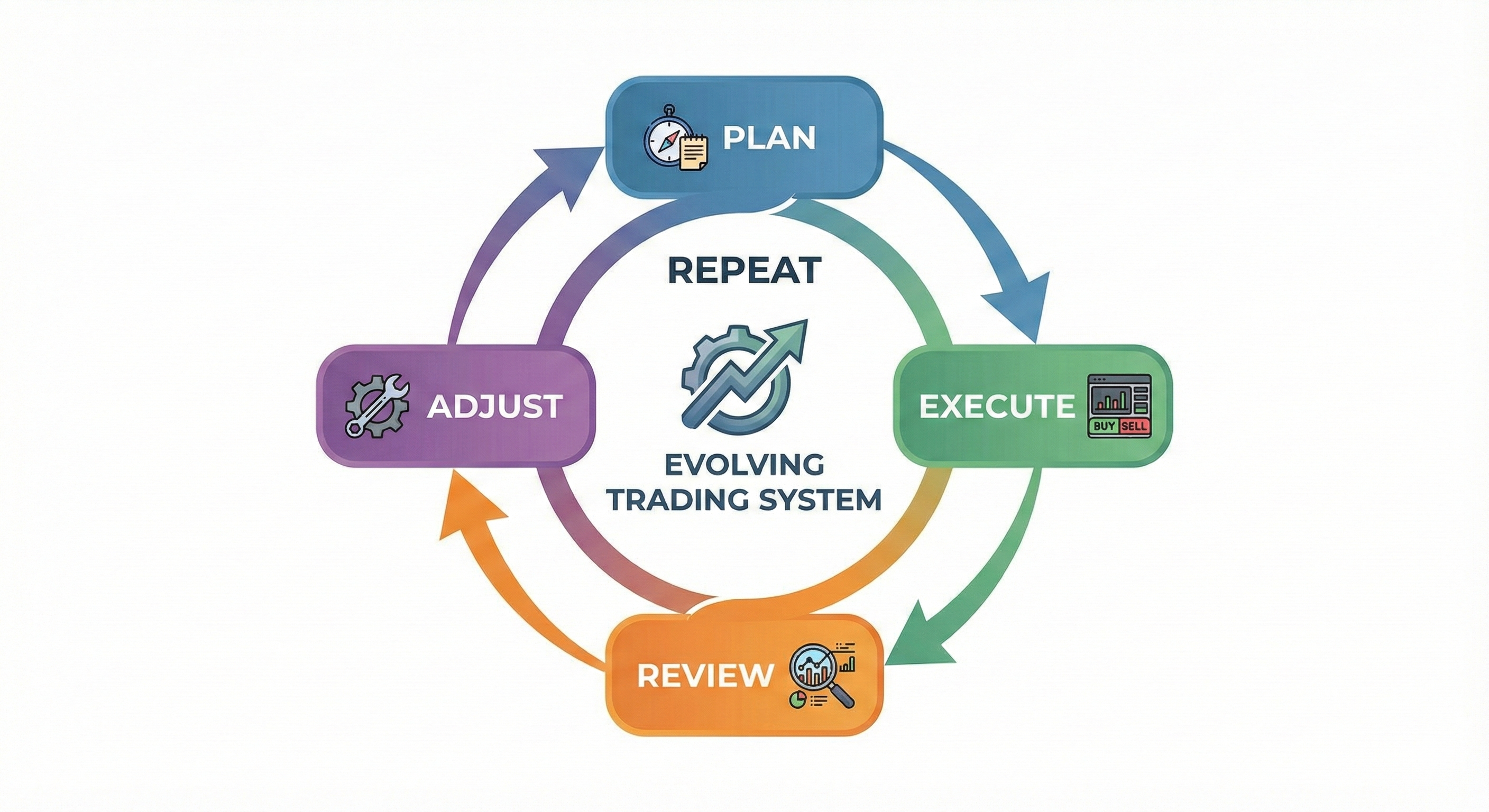
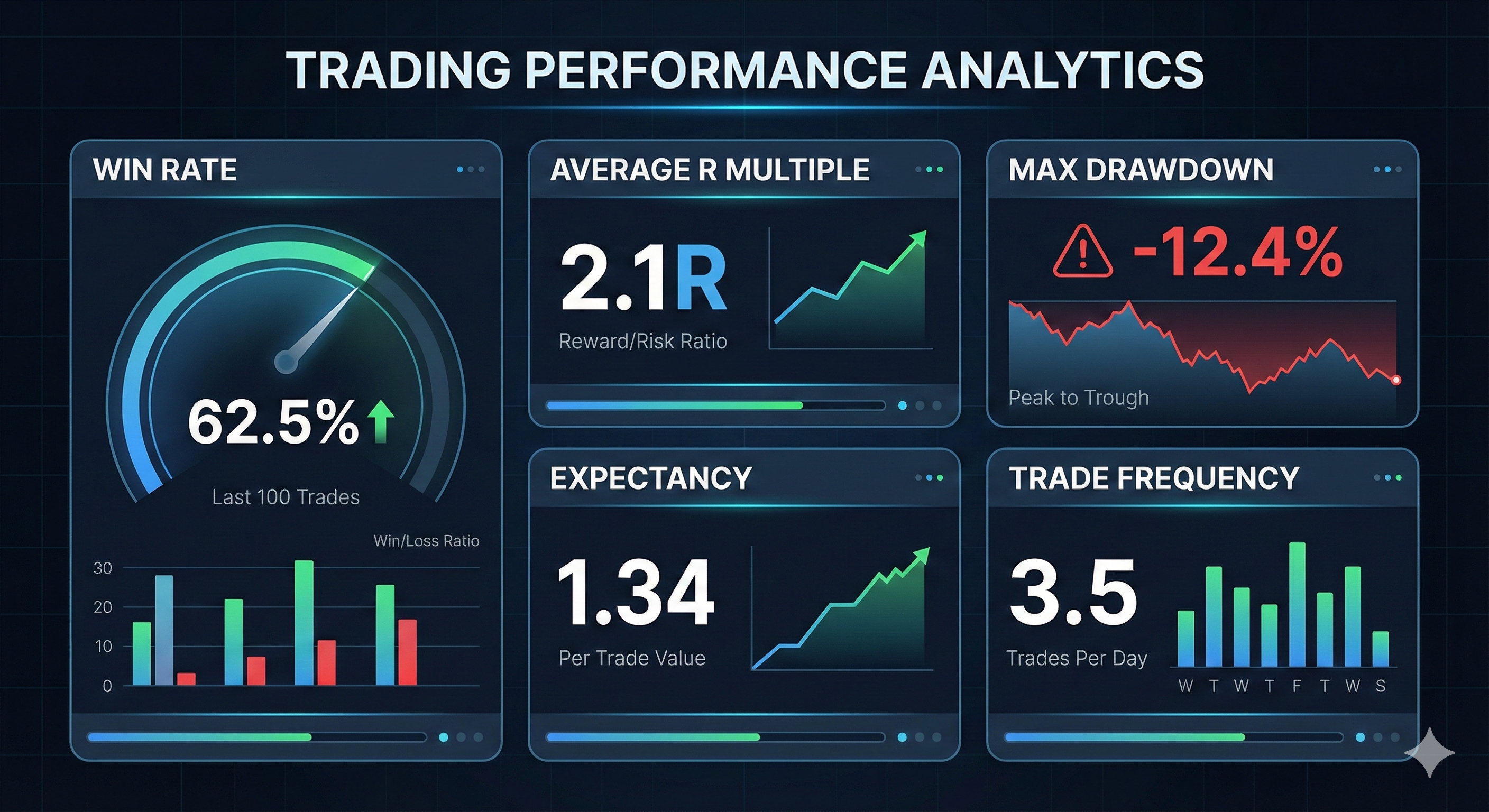
Diagram showing normal drawdown versus true system degradation over time.
Visual guide: expected drawdowns vs. true degradation. A healthy system can lose temporarily while still behaving within its normal performance range.
Lesson 12.2

Reviewing Performance the Right Way

Reviewing trades is pattern recognition, not self-judgement. Focus on a small set of stable metrics: win rate, average R, max drawdown, expectancy, and rule adherence.

Separate execution errors (you broke rules) from statistical losses (the setup was valid but didn’t work). Only execution errors require immediate behaviour fixes.

Trading review scoreboard showing expectancy, win rate, average R, and rule adherence.
A simple review scoreboard: track expectancy, win rate, average R, drawdown, and rule adherence so decisions are data-driven.
Lesson 12.3

Upgrading Rules Without Breaking the System

Changes should be controlled: one change at a time, tracked with a before/after window. If multiple rules change at once, results become impossible to diagnose.

Use a simple decision filter: Is the issue behaviour, market regime, or model gap? Behaviour fixes need discipline. Regime shifts need size adjustments. Model gaps need tested rule updates.

Lesson 12.4

Your Ongoing Maintenance Schedule

Weekly: review executions, tag mistakes, update notes. Monthly: review stats, adjust risk only if performance supports it. Quarterly: consider one improvement experiment, then measure.

This review rhythm prevents random “strategy hopping” and turns trading into a stable process that compounds skill over time.