MODULE 3 ·
EXECUTION SKILLS

Entries,
Exits & Execution

This module turns your trading plan into live decisions on the chart. You’ll learn how to choose precise entries, structure clear exits, and execute without hesitation. The goal is to remove randomness from entries and exits, and replace it with a repeatable checklist.

Lesson 3.1

What Makes a High-Probability Entry

High-probability entries happen when structure, trend, and liquidity all point in the same direction. When the higher timeframe is trending, lower timeframe structure supports that direction, and price reacts cleanly at key levels, the probability of follow-through increases.

Instead of hunting for trades on every candle, the aim is to wait until multiple conditions align, then execute once with confidence.
Lesson 3.2

Entry Triggers That Actually Matter

Entry triggers are the specific events that tell you “now is the time”. The most useful triggers are based on price behaviour, not indicators:

  • Break of structure (BOS) in the direction of trend
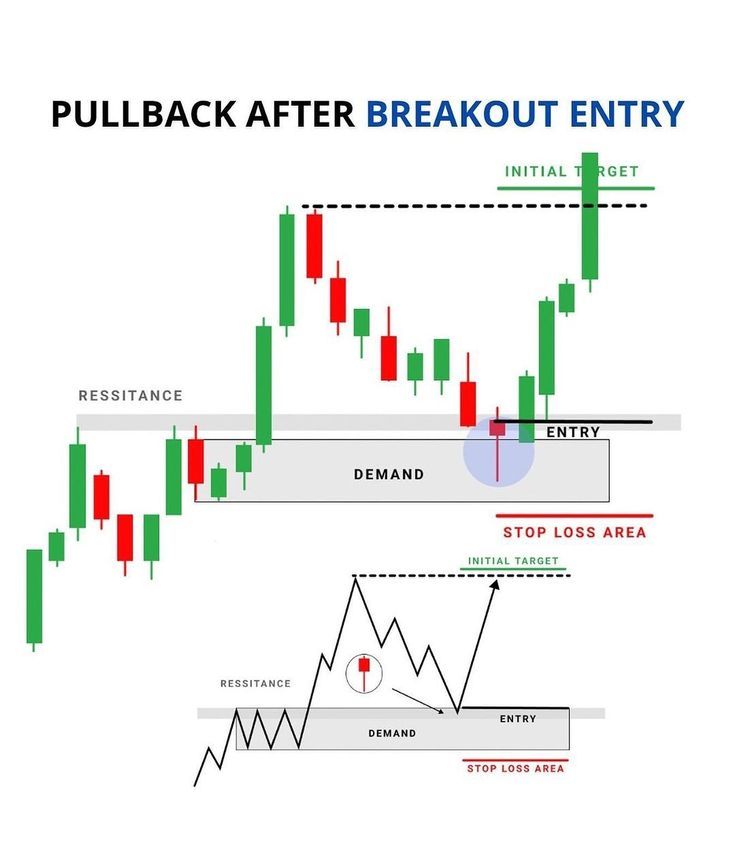
  • Retest entries after a breakout or key level break
  • Change of character (CHoCH) to signal a potential reversal

These triggers work well because they are built on the same structure rules used in Module 1, rather than on lagging signals.

Examples of BOS, Retest, and Change of Character entry triggers
Three core entry patterns: a clean break of structure, a retest entry after a break, and a change of character marking the first sign of reversal.
Lesson 3.3

Stop Placement That Makes Sense

Good stop placement does two things: it defines where your idea is invalid, and it keeps your risk per trade within your plan. Stops placed directly under swing lows in an uptrend, or above swing highs in a downtrend, are usually far more effective than random distances.

The stop is not there to avoid feeling uncomfortable. It exists so that when price hits it, you can say clearly: “this idea is now wrong”.

Lesson 3.4

Exit Rules & Trade Management

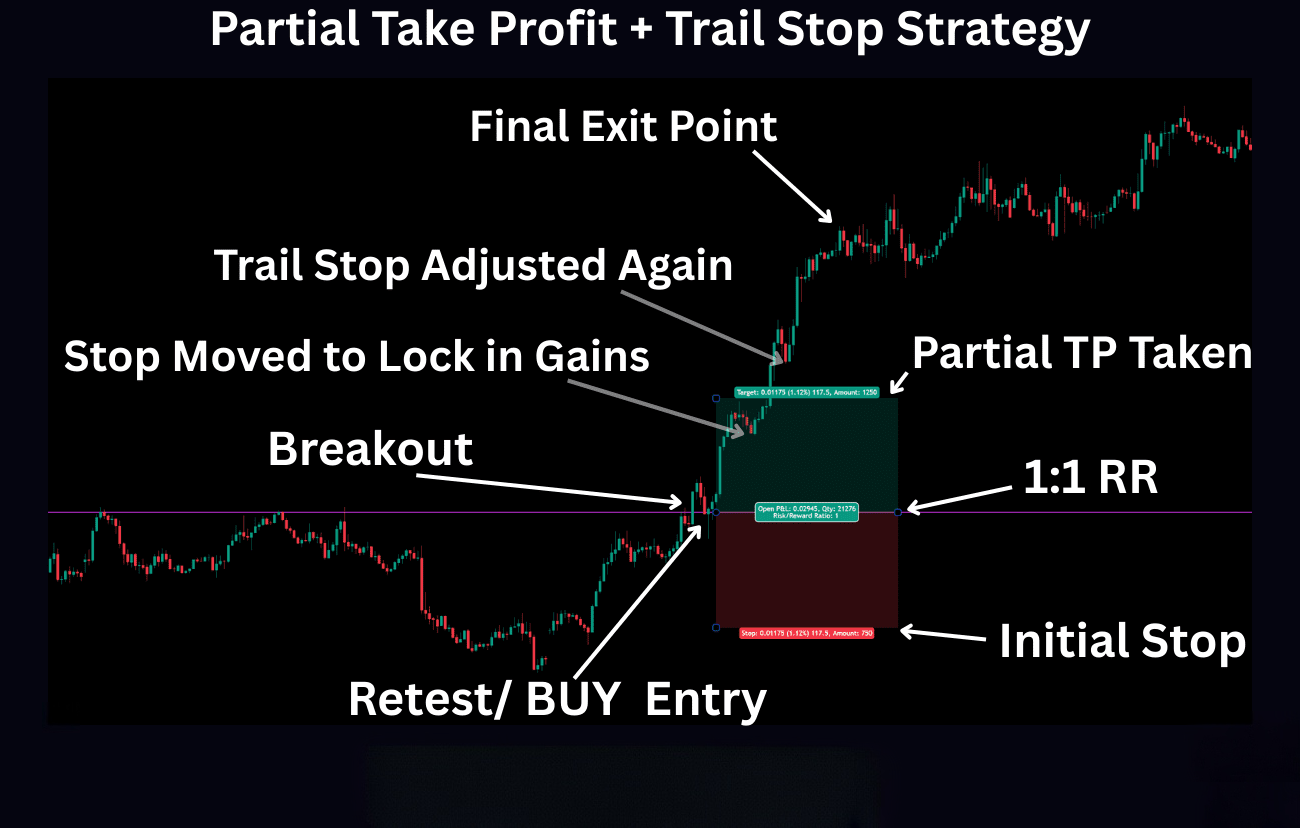
Without clear exit rules, it’s easy to take profits too early or hold losers too long. A simple exit framework might include:

  • Taking partial profit at the first logical structure level (TP1)
  • Holding a core position for a larger target (TP2)
  • Trailing the stop behind higher lows or lower highs as the trade moves

This keeps you engaged in strong moves while still locking in realised profit along the way.

Exit strategy map showing TP1, TP2 and trailing stop
Example of a structured exit: partial profit at TP1, main target at TP2, and a stop that trails behind structure as the trend develops.
Lesson 3.5

Execution Discipline in Real Time

Execution discipline is doing what your plan says, even when emotions are loud. That means entering when your trigger appears, not when it feels exciting, and exiting when your rules say “out”, even if part of you wants to hold on.

Consistency comes from repeating the same behaviours across hundreds of trades. Over time, this removes luck from the equation and lets your edge show through the noise.